
Table of Contents
- What Professional Pressure Washing Cost in Georgia Actually Covers
- Pressure Washing Price Per Square Foot: How Contractors Measure Your Property
- Soft Wash vs Pressure Wash Cost: Which Method Fits Your Surface?
- Factors Affecting Pressure Washing Quotes in Northeast Georgia
- Surface-Specific Damage Risks: What Cheap Pressure Washing Can Ruin
- How to Vet a Pressure Washing Contractor: A Georgia Homeowner’s Checklist
- Conclusion: Getting an Accurate Pressure Washing Quote
- Frequently Asked Questions
Last Updated: September 16, 2026
What Professional Pressure Washing Cost in Georgia Actually Covers
Most homeowners assume a pressure washing quote is mostly water and labor. It isn’t. When you request professional pressure washing cost in Georgia, you’re paying for five-figure equipment, insurance that protects your property, and a trained eye that knows which surface can take 4,000 psi and which will splinter at 1,200. At Spotless Pressure Washing, Carpet Cleaning & Tile & Grout Cleaning, we’ve served Northeast Georgia properties since 2008, and the gap between a bargain bid and a professional one comes down to what’s missing, not what’s included.
A pressure washing quote typically bundles five cost components:
- Labor and travel time to and from your property
- Commercial-grade equipment including surface cleaners, wands, and hose runs
- Detergent and treatment chemicals matched to the surface and the growth on it
- Liability insurance and licensing carried by the contractor
- Setup and water access management before a single pass is made
Hiring an uninsured pressure washing contractor means any damage to siding, deck boards, or windows becomes your liability claim, not theirs. Ask for a certificate of insurance before work begins, and verify the policy is current.
Pressure Washing Price Per Square Foot: How Contractors Measure Your Property
Pressure washing price per square foot is the industry’s standard measuring stick, but the number swings widely based on surface type, buildup, and access. A driveway with light dust sits at the low end; a roof covered in black algae streaks, or a two-story vinyl-sided home with landscaping in the way, pushes toward the high end.
Square Footage vs. Surface Area: Why Your Quote Changes
Square footage is the flat measurement of your property. Surface area accounts for everything the water actually has to touch, including vertical faces, railings, steps, and tight corners. A deck with a 400-square-foot footprint can double in surface area once you add railings, stairs, and a pergola.
How to Measure Your Own Property Before You Call
You can produce a number close to what a contractor will quote by doing three things:
- Measure the flat footprint of each hard surface, driveway, walkway, patio, deck, with a tape measure or a satellite measurement tool, and multiply length by width.
- Add vertical and detail area for siding, railings, steps, fences, and retaining walls. A common rule of thumb is to add 10-20% to the flat number for a simple deck and considerably more for one with railings and stairs.
- Note the buildup level on each surface, light pollen, moderate mildew, or heavy black algae, because buildup drives detergent cost and dwell time more than raw size does.
What Drives the Rate Up or Down
| Pricing Model | How It Works | Best For |
|---|---|---|
| Flat rate | One set price per job | Standard driveways, single-story siding |
| Per square foot | Rate multiplied by measured area | Large or multi-surface properties |
| Hourly rate | Billed by time on site | Complex jobs with uncertain scope |
| Surface-specific | Different rate per surface type | Roofs, decks, and delicate materials |
Within any of those models, the same handful of variables move the number:
- Surface material, concrete and asphalt clean fastest; wood, stucco, and painted surfaces require lower pressure and more care.
- Height and stories, a two-story wall needs longer hose runs, more setup, and often a ladder or lift.
- Access, locked gates, steep grades, and tight side yards add labor before the first pass.
- Water source, if there’s no spigot within reach, the contractor hauls water, which adds cost.
- Frequency, a property cleaned every 12-18 months stays at the low end; one that hasn’t been washed in five years sits at the high end.
Why You Shouldn’t Anchor on the Lowest Per-Square-Foot Number
A low per-square-foot rate is only meaningful if the scope behind it matches. Two contractors can quote the same driveway at very different rates because one includes pre-treatment for mildew, a post-rinse of landscaping, and a written workmanship guarantee, while the other simply runs a surface cleaner over the concrete and leaves. Compare bids line by line, detergent, pre-treatment, rinse-down, and guarantee, not just the rate.
Ask any contractor to show you how they measured your property and which surfaces they counted. A quote that can’t be traced back to a measurement is a quote you can’t compare fairly against another.
Soft Wash vs Pressure Wash Cost: Which Method Fits Your Surface?
Soft wash vs pressure wash cost differs because the two methods use entirely different equipment and chemical approaches. Soft washing relies on low pressure, typically under 500 psi, plus specialized detergents that kill mildew, algae, and organic growth at the root. Pressure washing uses high psi and water volume to blast dirt away.
Ask any contractor what psi and gpm flow rate they plan to use on each surface before you accept a quote. A technician who can’t answer that question specifically is guessing, and your roof or deck is what pays for the guess.
Factors Affecting Pressure Washing Quotes in Northeast Georgia
Several variables move a quote up or down, and understanding them helps you compare bids fairly instead of chasing the lowest number. Factors affecting pressure washing quotes include property size, surface type, buildup, accessibility, and season.
Seasonal Pricing Fluctuations and Scheduling Windows
Pricing in Northeast Georgia isn’t flat across the calendar. Spring and early summer fill up fast as homeowners prepare for curb appeal season, and peak demand means less flexibility on scheduling and pricing. Late fall and winter tend to be quieter, which can work in your favor if your property needs maintenance before the next growth season.
- Shoulder-season bookings, late fall and winter slots are typically easier to schedule and can carry more favorable pricing because demand drops.
- Bundle timing, if you need both a roof soft wash and a driveway cleaning, booking them together in a slower window often costs less than scheduling them separately during peak season.
Local Water Runoff and Detergent Rules
Most cost guides skip this, but it affects what a responsible contractor can and can’t do on your property. Stormwater flowing into municipal storm drains is regulated under the federal Clean Water Act’s municipal separate storm sewer system (MS4) framework, which many local jurisdictions implement through their own stormwater ordinances. In practice, wash water carrying detergent, algae, or heavy dirt shouldn’t run straight into a storm drain or nearby creek.
A contractor who follows the rules will:
- Contain or redirect runoff away from storm drains and waterways
- Use biodegradable detergents and avoid harsh solvents near landscaping
- Pre-wet and post-rinse plants, grass, and mulch beds to dilute overspray
- Block or absorb runoff on driveways that slope toward the street
Surface-Specific Damage Risks That Change the Price
Method selection is a cost factor, not just a safety one. The wrong method on the wrong material causes damage that costs far more to repair than the cleaning itself:
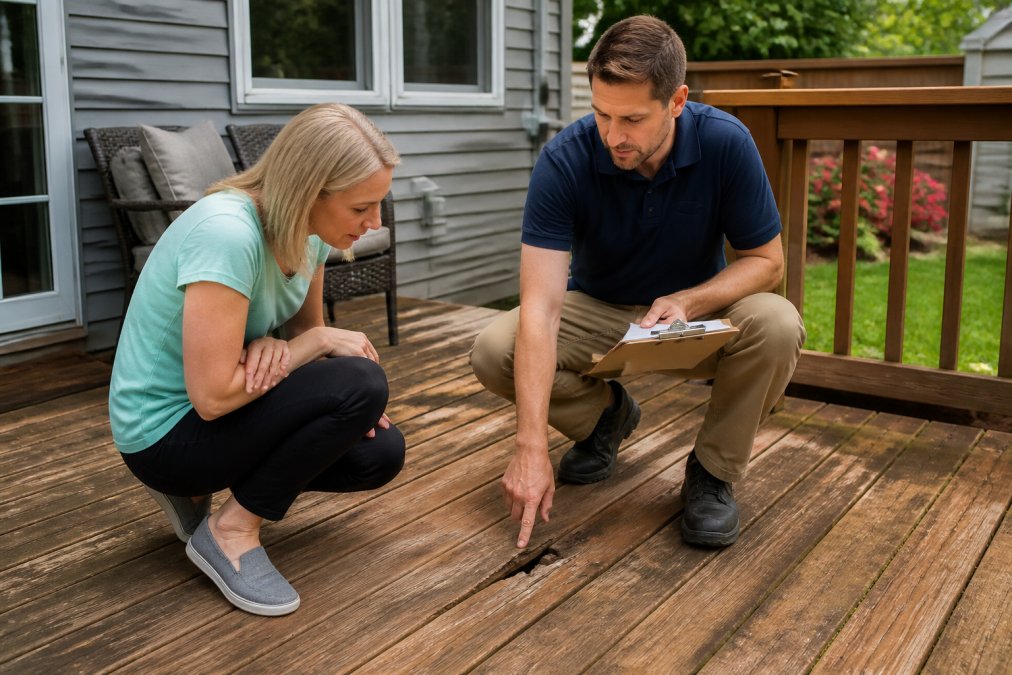
- Wood decks, high pressure etches the grain into a fuzzy texture that traps moisture and accelerates rot. Soft washing at low pressure protects the boards.
- Vinyl siding, too much pressure can crack panels or force water behind them, feeding mold inside the wall cavity.
- Asphalt shingles, high pressure strips the protective granules, shortening the roof’s life. Roofs should be soft washed.
- Brick and mortar, mortar joints erode when a narrow nozzle gets too close, and older brick can spall.
- Painted surfaces, pressure can lift paint at edges and seams, turning a cleaning job into a repainting job.
The right method for each surface prevents damage that costs far more to repair than the cleaning itself. Method selection, not price, is what separates a professional job from a risky one.
Surface-Specific Damage Risks: What Cheap Pressure Washing Can Ruin
How to Vet a Pressure Washing Contractor: A Georgia Homeowner’s Checklist
Choosing a contractor comes down to verifying credentials, not comparing the lowest bid. Use this checklist before you sign:
- Ask for a certificate of liability insurance and confirm it’s current
- Confirm the contractor carries a workmanship guarantee in writing
- Request the psi and gpm flow rate planned for each surface
- Ask which surfaces will be soft washed versus pressure washed
- Get the quote in writing with the scope of work itemized
- Ask how detergent application and mildew removal are handled
- Confirm scheduling, arrival window, and weather contingency
- Check whether gutter cleaning or driveway sealing is included or extra
Conclusion: Getting an Accurate Pressure Washing Quote
The challenge with professional pressure washing cost in Georgia isn’t finding a number. It’s finding a number that reflects real insurance, real equipment, and a method matched to your surfaces. A low bid that skips any of those three isn’t a deal, it’s a liability waiting to surface.
Frequently Asked Questions
How much does it cost to pressure wash a house in Georgia?
The professional pressure washing cost in Georgia depends on your home’s size, siding material, and level of buildup. Contractors typically price by square footage or flat rate, with two-story homes and heavy mildew requiring more time and detergent. Request a free on-site quote from a licensed provider so they can measure your exterior and account for any delicate surfaces before giving you a firm number.
Does the size of my home affect pressure washing quotes?
Yes. Square footage is one of the biggest drivers of pressure washing price per square foot. A 1,500-square-foot ranch has less exterior wall area than a 3,000-square-foot two-story, so it takes less time, water, and detergent. Contractors also measure driveways, decks, and walkways separately. Always ask whether the quote covers the full exterior or just the siding so you can compare estimates fairly.
What is the difference between soft washing and pressure washing costs?
Soft wash vs pressure wash cost differs because soft washing uses lower pressure with specialized cleaning solutions to kill mold and algae at the root. It takes longer and requires more detergent, so it often costs more upfront than a basic pressure rinse. However, soft washing protects delicate surfaces like vinyl siding, shingles, and older wood from damage that high-pressure water can cause. The right method depends on your surface material.
Are there extra fees for removing mold or mildew during pressure washing?
Mold and mildew removal can add to your quote because it requires specialized treatments and sometimes a second application to fully kill spores. Heavy growth on north-facing walls, shaded decks, or roofs may need soft washing with algaecides rather than plain water. Ask your contractor whether mildew treatment is included or billed separately, and confirm they use methods that prevent regrowth instead of just blasting the surface.