
Table of Contents
- Identify Where the Odor Is Coming From
- Blot and Pre-Treat Fresh Stains Immediately
- Best Enzymatic Cleaner for Pet Urine
- DIY Natural Deodorizing Solutions
- How to Deep Clean Carpet for Pet Odors
- Professional Carpet Cleaning for Pet Stains
- Prevent Future Pet Accidents and Odors
- Frequently Asked Questions
Last Updated: September 20, 2026
Identify Where the Odor Is Coming From
Pet odors don’t always come from where you think they do. The smell might be lingering in carpet fibers on the surface, but it could also be trapped deep in the carpet padding or even soaked into the subfloor below. Finding the actual source is the critical first step before you can effectively remove pet odors from carpets.
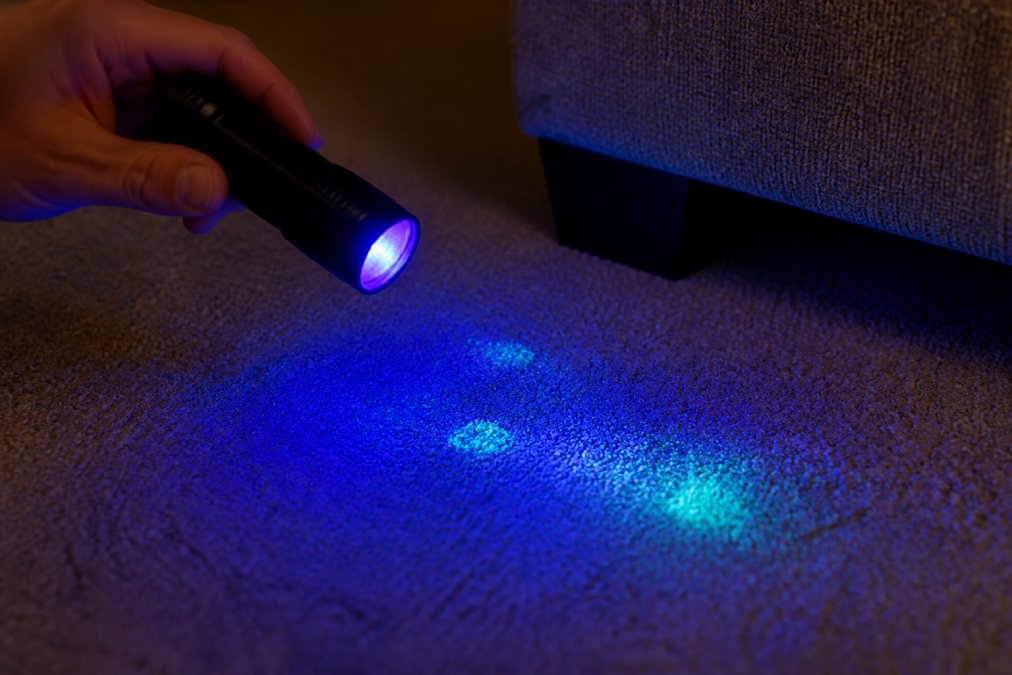
Using a Blacklight to Find Hidden Spots
A blacklight reveals pet urine that’s invisible to the naked eye. Pet urine contains compounds that fluoresce under ultraviolet light, showing you exactly where accidents have occurred. This is especially useful for identifying multiple spots you might have missed, including old stains that have dried and stopped smelling temporarily.
To use a blacklight effectively, darken the room completely and slowly scan the carpet with the light. Mark any glowing spots with tape or chalk so you can treat them specifically. Many homeowners are shocked to discover their pet has had accidents in multiple locations they never noticed. This detective work ensures you treat every problem area, not just the obvious ones.
Checking Carpet Padding and Subfloor
Urine doesn’t stop at the carpet fibers. Once it penetrates through the carpet, it soaks into the padding underneath. If the padding is saturated, the odor will persist even after you clean the surface fibers. In severe cases, the urine reaches the subfloor, creating a much bigger problem.
Press on wet areas with a white cloth. If moisture comes up, the padding is saturated. Lift a corner of the carpet in the affected area to inspect the padding directly. If the padding is discolored, has a strong smell, or feels spongy, it needs professional treatment or replacement. This is one of the most common reasons DIY cleaning fails, people treat only the carpet surface while the real problem sits underneath.
Blot and Pre-Treat Fresh Stains Immediately
Speed matters with fresh pet accidents. The longer urine sits, the more time it has to bond with carpet fibers and penetrate deeper. Blotting within the first few minutes makes a dramatic difference in how easily you can remove pet odors from carpets.
Never rub or scrub fresh stains. Rubbing pushes the urine deeper into the fibers and spreads it across a wider area. Instead, use white paper towels or a clean cloth and press down firmly to absorb as much liquid as possible.
Best Enzymatic Cleaner for Pet Urine
Enzymatic cleaners are the most effective tool for removing pet odors from carpets because they break down the organic compounds that cause the smell. Unlike regular cleaners that mask odors, enzymatic cleaners actually eliminate the source.
How Enzymatic Cleaners Break Down Uric Acid
Pet urine contains uric acid crystals that regular water and soap cannot dissolve. Enzymatic cleaners contain protease enzymes that specifically target and break apart these uric acid molecules, converting them into odorless compounds. This is why enzymatic cleaners work where standard carpet cleaners fail.
Application Steps for Maximum Effectiveness
Start by saturating the affected area with the enzymatic cleaner. Pour it directly onto the stain and surrounding area so the carpet fibers are thoroughly wet. Do not dilute the cleaner more than the product instructions recommend. The concentration matters.
DIY Natural Deodorizing Solutions
If you prefer natural alternatives or want to supplement enzymatic cleaners, several household ingredients can help neutralize pet odors. These work best for mild odors or as maintenance treatments rather than for severe saturation.
Baking Soda Application Techniques
Baking soda absorbs odors rather than masking them. Sprinkle it generously over the affected carpet area and let it sit for 24-48 hours. The longer it sits, the more odor it absorbs. Vacuum thoroughly afterward to remove all the powder. For best results, apply baking soda after the area has completely dried following enzymatic treatment.
Vinegar and Water Neutralizing Methods
White vinegar contains acetic acid that neutralizes the alkaline compounds in pet urine. Mix equal parts white vinegar and water in a spray bottle. Spray the affected area until damp, let it sit for 30 minutes, then blot with clean towels. The vinegar smell will fade as it dries, taking much of the pet odor with it.
How to Deep Clean Carpet for Pet Odors
When DIY treatments aren’t enough, deep cleaning becomes necessary. This involves either hot water extraction or professional-grade equipment that reaches fibers and padding that surface treatments cannot access.
Hot Water Extraction for Stubborn Odors
Hot water extraction, also called steam cleaning, forces hot water and cleaning solution deep into carpet fibers and padding. The heat helps break down odor-causing compounds while the water pressure extracts deeply trapped residue. You can rent extraction equipment from hardware stores, or hire a professional to do this work.
Moisture Extraction and Air Drying
After hot water extraction, proper drying is critical. Remaining moisture can lead to mold growth and new odors. Use the extraction machine’s suction setting to pull out as much water as possible. Then open windows, use fans, and run a dehumidifier to dry the carpet completely. The carpet should dry within 24-48 hours.
Professional Carpet Cleaning for Pet Stains
Sometimes the problem is simply too severe for DIY methods. Professional carpet cleaning equipment and expertise can address situations where home treatments have failed or where damage is extensive. Understanding when to make this decision saves time and money.
Decision Matrix: DIY vs. Professional Treatment
Use this framework to determine whether professional cleaning is necessary:
DIY methods are likely sufficient if:
- The accident occurred within the last 24-48 hours (fresh stains)
- The odor is mild and localized to a single small area (under 10 square feet)
- The carpet padding feels dry when pressed with a cloth
- You’ve successfully removed similar odors in the past using enzymatic cleaners
- The carpet is synthetic (polyester, polypropylene, or nylon) rather than natural fiber
Professional treatment is necessary if:
- The odor persists after two or more rounds of enzymatic treatment and extraction
- The carpet padding is visibly saturated, discolored, or smells strongly of ammonia
- The affected area is large (over 20 square feet) or involves multiple rooms
- The carpet is wool, silk, or another delicate natural fiber (DIY extraction risks permanent damage)
- You suspect urine has reached the subfloor
- Mold or mildew growth is visible in or under the carpet
- The pet has had multiple accidents in the same location over weeks or months
What Professional Deep Cleaning Removes
Professional equipment operates at a different scale than rental machines. Commercial hot water extractors use 200+ PSI pressure and heat water to 210-220°F, compared to rental machines at 100-150 PSI and 150-180°F. This higher pressure and temperature combination breaks down uric acid crystals more effectively and extracts moisture from deep padding layers that household equipment cannot reach.
Cost-Benefit Analysis
Professional pet odor removal typically costs $200-$600 for a single room, depending on size and severity. Full carpet replacement (padding plus carpet) costs $2,000-$8,000 for an average room. When DIY methods fail, the choice is often between professional cleaning ($300-$500) or replacement ($5,000+). Professional treatment is almost always the more economical option when padding saturation or subfloor involvement is suspected.
Prevent Future Pet Accidents and Odors
Once you’ve successfully removed pet odors from carpets, prevention becomes your priority. The right maintenance approach stops problems before they start.
Protecting Carpet Fibers and Padding
Enzymatic cleaners work best on fresh accidents, so catching problems immediately is essential. Train pets to use designated bathroom areas outside or in easily cleanable spaces. Use enzymatic cleaners as soon as accidents happen, before urine dries and sets permanently.
Maintenance and Regular Vacuuming
Regular vacuuming removes surface debris and helps identify new accidents quickly. Vacuum high-traffic areas and pet zones at least twice weekly. This also helps maintain carpet appearance and prevents odors from building up gradually.
Frequently Asked Questions
Why does my carpet still smell like dog even after I clean it?
Pet odors persist when urine soaks into carpet padding and subfloor, not just surface fibers. Uric acid crystals in urine continue to release odor molecules even after the carpet dries. Surface cleaning and spot treatment don’t reach deep saturation. Enzymatic cleaners break down the organic matter causing the smell, but only if they penetrate to where urine crystals have settled. If odor returns after cleaning, the padding likely needs replacement or professional hot water extraction to fully neutralize the source.
What is the best enzymatic cleaner for pet urine?
Enzymatic cleaners work by breaking down uric acid and organic compounds that cause pet odors. Look for products specifically formulated for pet urine that contain protease enzymes. The best enzymatic cleaner for pet urine will have a high enzyme concentration and longer dwell time (the time it sits on the carpet before removal). Apply generously to saturated areas, allow it to work for 12-24 hours, then extract thoroughly. Enzymatic cleaners are most effective on fresh accidents; for old stains, you may need professional hot water extraction to reach odor sources in carpet padding.
How do professionals remove pet odors?
Professional carpet cleaning for pet stains uses hot water extraction combined with enzymatic treatments to reach deep-set odors in carpet fibers and padding. Professionals use commercial-grade equipment that injects cleaning solution deep into the carpet and extracts moisture and residue more completely than household methods. Many also apply deodorizers and may replace severely saturated padding. Professionals can identify odor sources with blacklight detection and assess whether the subfloor has been affected. This approach removes odor molecules at the source rather than masking them, providing longer-lasting results than DIY methods alone.
Can baking soda actually remove deep-set pet odors?
Baking soda absorbs odors and can help neutralize surface smells, but it cannot remove deep-set pet odors trapped in carpet padding or subfloor. Baking soda works best as a maintenance step after enzymatic cleaning or hot water extraction. Sprinkle it on dry carpet, let it sit for several hours, then vacuum thoroughly. For existing deep odors, baking soda alone will mask the smell temporarily but won’t eliminate uric acid or odor-causing bacteria. Combine baking soda with enzymatic cleaners or professional deep cleaning for best results on stubborn pet odors.