
Table of Contents
- Why Red Clay Binds So Tightly to Concrete
- What You’ll Need: Tools, Cleaners, and Safety Gear
- Choosing a Red Clay Stain Remover for Concrete
- Step-by-Step: Removing Stubborn Red Clay from Concrete
- Best Pressure Washing Techniques for Clay Stains
- When to Call Professional Concrete Cleaning Services
- Preventing Future Red Clay Stains on Concrete
- Frequently Asked Questions
Last Updated: September 22, 2026
Why Red Clay Binds So Tightly to Concrete
Red clay is one of the hardest stains to lift from concrete because its fine particles work their way deep into the surface. This guide from Spotless Pressure Washing, Carpet Cleaning & Tile & Grout Cleaning walks through removing stubborn red clay from concrete step by step, using methods that protect the slab while getting it clean.
How Clay Particles Penetrate Concrete Pores
Concrete porosity is the reason clay stains go from surface-level to permanent-looking in a hurry. A concrete driveway is not solid on the microscopic level. It’s packed with tiny openings where water and air move through.
- Wet clay swells and slides into pores
- Dry clay hardens and locks in place
- Repeated exposure builds layer on layer
Which Concrete Surfaces Are Most Vulnerable
Not all concrete holds clay the same way. Older, unsealed slabs and rough-finished surfaces trap the most. Broom-finished driveways, which have a textured surface, grab clay far more than smooth, sealed concrete.
What You’ll Need: Tools, Cleaners, and Safety Gear
A red clay stain remover for concrete works best when you pair the right product with the right tools. Skip the gear and you’ll scrub twice as long for half the result.
Here’s a practical starter list:
- Pressure washer or power washer with adjustable pressure
- Surface cleaner attachment for flat areas
- Stiff scrub brush with synthetic bristles
- Pump sprayer for applying cleaner
- Garden hose for pre-rinse and final rinse
- Buckets for mixing and rinse water
- Plastic sheeting to protect plants and grass
Personal Protective Equipment Checklist
Chemical cleaners and clay dust both pose real risks. Personal protective equipment is not optional here.
- Safety goggles to block splash and mist
- Chemical-resistant gloves
- Rubber boots with good tread
- Long sleeves and pants
- Respirator if you’re using strong acids
Never mix muriatic acid with bleach or ammonia. The reaction releases toxic gas. Always read the label and add chemicals to water, never water to chemicals.
Choosing a Red Clay Stain Remover for Concrete
The right cleaner depends on how deep the stain has set. Light surface clay responds to alkaline cleaners. Deep, set-in stains often need an acid-based product.
| Stain Type | Best Cleaner Type | Why It Works |
|---|---|---|
| Light surface clay | Alkaline cleaner | Lifts fresh deposits without etching |
| Set-in clay stains | Oxalic acid | Breaks the bond between clay and pore |
| Rust-colored residue | Rust remover | Targets iron oxides in the clay |
| Heavy, old buildup | Muriatic acid | Dissolves stubborn mineral bonds |
Acid-Based vs. Non-Acid Options
Acid-based cleaners like muriatic acid and oxalic acid work fast on tough stains. They dissolve the mineral bond that holds clay to concrete. But they also carry risks: chemical etching, plant damage, and runoff concerns.
Test any acid cleaner on a small, hidden patch first. Wait 24 hours to check for surface discoloration before treating the whole slab.
Step-by-Step: Removing Stubborn Red Clay from Concrete
Removing stubborn red clay from concrete comes down to four things: prep, dwell time, agitation, and rinsing. Rush any of those steps and the stain wins.
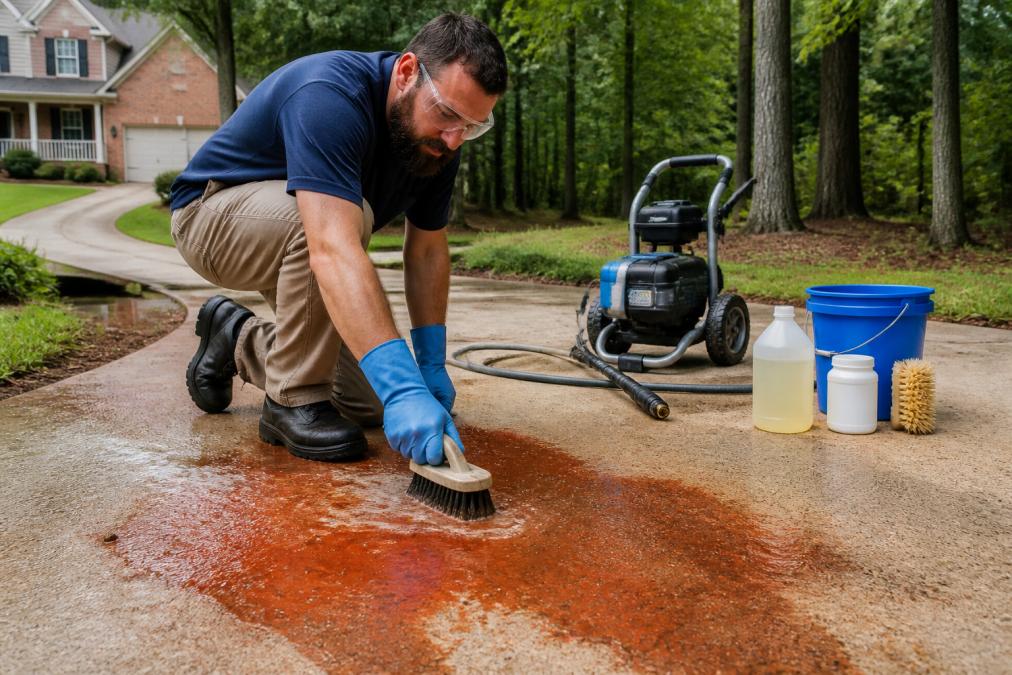
Step 1: Prep and Pre-Rinse
Clear the area first. Move cars, furniture, and anything that could block your work. Cover nearby plants with plastic sheeting to protect them from runoff.
Step 2: Apply Cleaner and Let It Dwell
Apply your chosen cleaner with a pump sprayer. Work in small sections so the product doesn’t dry before you get to it.
Step 3: Agitate, Rinse, and Repeat
Scrub with a stiff brush using circular motions. Focus on the darkest spots. Agitation is what lifts clay out of the pores.
Step 4: What to Do When the Stain Survives the First Pass
Work through these checks in order:
- Is the surface actually dry? Clay that looks gone while the slab is wet often reappears as a faint orange ghost once it dries. Wait a full 24 hours before judging the result.
- Did the cleaner dwell long enough? A product that flashed dry in the sun never had time to work. Re-wet, reapply, and keep the section shaded or misted.
- Is the residue clay or iron? Red clay often carries iron that leaves a rust-colored shadow even after the clay itself is gone. That shadow needs an oxalic-acid or rust-specific remover, not more clay cleaner.
- Did you agitate the pores, not just the surface? A stiff brush on a broom-finished slab needs real downward pressure. Light scrubbing only moves the top layer.
Do not increase pressure to compensate for a stubborn stain. Cranking a pressure washer past the surface’s tolerance etches the concrete and leaves permanent wand marks that look worse than the clay did.
A note on decorative concrete: If your slab is stamped, colored, or exposed aggregate, stop before any acid step. Acids can strip color and dull the release agents and sealers that give those surfaces their finish. Test every product on a hidden patch, and when in doubt, treat decorative concrete as a professional-only job.
Best Pressure Washing Techniques for Clay Stains
Pressure washing speeds up clay removal, but only when you use it correctly. Too much pressure strips concrete and damages the surface. Too little does nothing.
Nozzle Selection and Pressure Settings
Use a 25-degree or 40-degree nozzle for concrete. A 0-degree tip concentrates pressure and etches the slab.
Downstreaming vs. Upstreaming
Downstreaming injects cleaner through the pressure washer after the pump. It covers large areas fast and is the standard method for driveways.
Match your pressure and nozzle to the surface, not the stain. Slow, even passes with the right tip beat high pressure every time.
When to Call Professional Concrete Cleaning Services
Some stains don’t come out with DIY methods. Professional concrete cleaning services make sense when the clay has set for months, the slab is delicate, or you’ve already tried and failed.
A few signs it’s time to call in help:
- The stain has been there for more than a season
- Your DIY attempts left surface discoloration
- The concrete is old, cracked, or already damaged
- You don’t want to handle acids or heavy equipment
Preventing Future Red Clay Stains on Concrete
The best stain removal is the one you never have to do. A few simple habits keep red clay from becoming a recurring problem.
- Rinse your driveway after heavy rain
- Sweep clay off walkways before it dries
- Keep gutters clear so runoff doesn’t pool
- Reapply sealer every few years
Sealing Your Concrete After Cleaning
Sealing is the single most effective step you can take after removing stubborn red clay from concrete. A quality sealer fills the pores that clay loves to invade, so the next storm’s runoff beads on the surface instead of soaking in.
Match the sealer to the surface:
- Plain, unsealed concrete: A penetrating silane-siloxane sealer soaks in and blocks water without leaving a film. It won’t change the look of the slab.
- Stamped or colored concrete: Use a solvent- or water-based acrylic sealer made for decorative surfaces. These preserve color and add a slight sheen, but they sit on top and need reapplication more often.
- Exposed aggregate and pavers: A penetrating sealer is usually the better choice because it won’t trap moisture in the textured finish.
Matching Your Method to Your Concrete Type
Before you seal, clean, or treat anything, identify what kind of concrete you’re standing on. The wrong method on the wrong surface causes damage that no cleaner can undo.
- Plain gray concrete: The most forgiving surface. It tolerates alkaline cleaners, oxalic acid, and moderate pressure washing.
- Stamped concrete: The pattern is pressed into the surface and often enhanced with color hardeners and release agents. Harsh acids and high pressure blur the pattern and strip the color. Stick to alkaline cleaners and low pressure.
- Colored concrete: Integral color runs through the slab, but acid washing can still dull or blotch it. Test first, and avoid muriatic acid entirely.
- Exposed aggregate: The pebbles are held in a cement matrix that acids can weaken. Use gentler cleaners and a soft-bristle brush.
- Sealed concrete: If the sealer is intact, most clay rinses off. If the sealer is worn or flaking, clean and reseal rather than attacking the stain with acid.
When you’re not sure what finish you have, pour a cup of water on a hidden spot. If it beads and rolls off, the surface is sealed. If it soaks in and darkens the concrete, it’s unsealed and more vulnerable to clay.
A Simple Maintenance Schedule
Prevention works best on a rhythm. Rinse high-traffic areas after storms, sweep clay off walkways before it dries, and inspect your sealer once a year. When water stops beading, it’s time to reseal, usually every two to three years for a driveway, sooner for decorative surfaces exposed to full sun.
Frequently Asked Questions
Will muriatic acid remove red clay stains from concrete?
Muriatic acid can dissolve red clay stains, but it is a harsh chemical that etches concrete and requires careful handling with personal protective equipment. It works best on bare, unsealed concrete and must be neutralized afterward. For most homeowners, a dedicated red clay stain remover for concrete or a professional cleaning service is a safer and more controlled option.
Can pressure washing remove deep-set red clay?
Pressure washing alone removes surface clay, but deep-set stains that have penetrated concrete pores often need a chemical treatment first. The best pressure washing techniques for clay involve applying a cleaner, allowing dwell time, agitating with a scrub brush, and then rinsing with a surface cleaner at the right pressure. This two-step approach delivers far better results than water alone.
How do I prevent red clay from staining my concrete in the future?
After removing existing stains, apply a penetrating concrete sealer to block clay particles from entering the pores. Keep gutters and drainage directed away from concrete surfaces, and rinse off any red clay deposits promptly before they dry. Regular cleaning and resealing every few years will keep your concrete looking fresh and make future stain removal much easier.
Is it safe to use bleach on red clay stains?
Bleach is not effective on red clay because the stain is mineral-based, not organic. Bleach kills mold and algae but will not break down iron oxide particles in clay. Using bleach on concrete can also damage nearby plants and create hazardous runoff. Instead, use an oxalic acid-based or specifically formulated red clay stain remover, and follow all label directions for safe application.
Red clay is stubborn, but it’s not permanent. With the right cleaner, proper technique, and a good sealer, most driveways come back to life in a single afternoon. When the stain runs deep or the job feels risky, Spotless Pressure Washing, Carpet Cleaning & Tile & Grout Cleaning can help. Our team brings IICRC-certified expertise, commercial-grade pressure washing equipment, and a fully insured process to every job. Get a free quote and see the difference a professional clean makes.