
Table of Contents
- What to Expect from Residential Carpet Cleaning Services in Monroe, GA
- How to Prepare for Carpet Cleaning Service
- Benefits of IICRC Certified Carpet Cleaning
- Carpet Cleaning Cost Calculator: What Drives Your Quote
- Pet Stain Treatment and Odor Neutralization That Lasts
- DIY vs. Professional Carpet Maintenance: Where Each Makes Sense
- Scheduling, Turnaround Times, and Move-In/Move-Out Cleaning
- Frequently Asked Questions
Last Updated: September 21, 2026
What to Expect from Residential Carpet Cleaning Services in Monroe, GA
Residential carpet cleaning services in Monroe, GA, fall into two categories: truck-mounted hot water extraction and low-moisture cleaning. Both remove embedded soil but differ in water use, drying time, and depth. This guide from Spotless Pressure Washing, Carpet Cleaning & Tile & Grout Cleaning covers each method, what drives your quote, and how to prepare your home.
Truck-Mounted Hot Water Extraction vs. Low-Moisture Cleaning
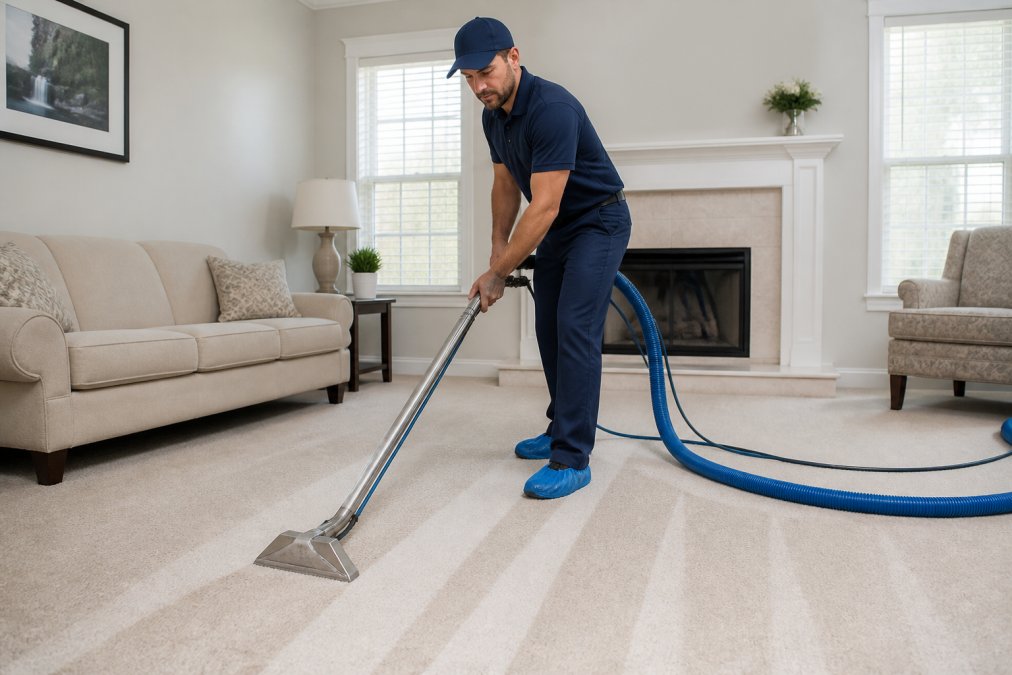
Truck-mounted hot water extraction is the method most professional cleaning services use for heavily soiled carpet. A hose runs from the truck to a wand inside your home, injecting heated water and solution deep into the fibers, then extracting it with loosened soil. Drying takes several hours with good airflow.
| Method | Water Use | Drying Time | Best For |
|---|---|---|---|
| Truck-mounted hot water extraction | High | Several hours | Heavily soiled residential carpet |
| Low-moisture encapsulation | Low | Under an hour | Commercial spaces, quick turnaround |
| Steam cleaning | Moderate | A few hours | General maintenance, light soil |
Deep Cleaning, Stain Removal, and Odor Neutralization
Deep cleaning targets soil trapped at the base of the carpet pile, where allergens and fine particles settle. Stain removal handles specific spills, while odor neutralization addresses the source of smells rather than masking them.
Ask your technician whether the quote includes pad treatment for pet odors. If it doesn’t, the smell will likely return within weeks, especially in humid months.
How to Prepare for Carpet Cleaning Service
Preparing for carpet cleaning service takes about 30 minutes and prevents delays. Clear the floors, secure pets, and confirm parking access for the service vehicle.
Furniture, Pets, and Parking: A Pre-Cleaning Checklist
- Vacuum high-traffic areas to lift loose debris
- Remove small furniture, decor, and floor lamps
- Clear breakables from shelves near carpet edges
- Confine pets to a room that won’t be cleaned
- Reserve a parking spot close to your door for the truck
- Note any stains or odors you want addressed specifically
- Confirm which rooms are included in your service quote
Technicians typically move light furniture but not pianos, large aquariums, or electronics. Mention anything unusual when you book.
Benefits of IICRC Certified Carpet Cleaning
IICRC-certified carpet cleaning means the technician has completed training through the Institute of Inspection, Cleaning and Restoration Certification, a standards body for the cleaning and restoration industry. Certification signals understanding of fiber types, cleaning chemistry, and safe extraction methods.
Licensed, Insured, and Accountable
Certification is not the same as insurance, and you should ask for both. A licensed and insured provider carries liability coverage, so you are not left holding the bill if something goes wrong. Before booking, request a certificate of insurance and confirm it is current.
Hiring an uninsured provider can leave you liable for property damage or worker injuries on your property. Always request proof of insurance before the crew arrives.
Carpet Cleaning Cost Calculator: What Drives Your Quote
A carpet cleaning cost calculator is only as good as the variables it uses. Most professional quotes depend on square footage, fiber type, and soil level, plus add-ons like pet treatment or stain removal. Here is the framework technicians use to price a job.
Square Footage, Fiber Type, and Soil Level
- Square footage: Larger areas take more time, water, and solution. Most providers price by the room up to a threshold (often 200-300 square feet), then switch to a per-square-foot rate for open-plan spaces, basements, and great rooms.
- Fiber type: Wool, nylon, polyester, and olefin respond differently to heat and cleaning agents. Wool and natural fibers carry a premium because they need lower heat and gentler chemistry; solution-dyed synthetics tolerate standard hot water extraction.
- Soil level: Heavily matted or neglected carpet needs more passes and longer drying. Carpet uncleaned for five years can take two to three times the passes of one maintained annually.
- Add-ons: Pet stain treatment, odor neutralization, and furniture moving affect the total. Pet treatment is priced per affected area, not per room, because the technician must treat the pad and subfloor.
- Access: Tight stairwells and upper floors slow the job and can change pricing. Stairs are almost always priced per step.
How to Read a Quote Without Getting Surprised
A legitimate quote should separate the base cleaning, requested add-ons, and condition-based charges discovered on arrival. Ask specifically:
- Is the quote per room or per square foot? Per-room pricing is easier to compare across providers, but confirm the room-size cap.
- Does the price include pre-treatment and post-treatment? Some providers charge separately for pre-spray, traffic-lane pre-treatment, or a protective fiber coating.
- Is furniture moving included? Most providers move light furniture (chairs, small tables) at no charge but exclude pianos, large aquariums, electronics, and beds with heavy frames.
- What triggers an on-site upcharge? Common triggers are excessive pet contamination, red wine or dye stains that require specialty spotting agents, and carpet that has been previously cleaned with a residue-leaving product.
- Is there a minimum service charge? Many providers have a minimum for single-room or small-area jobs because the setup cost is the same as a full-home job.
What Drives the Price Up or Down
Two homes of identical square footage can get quotes that differ by hundreds of dollars. The usual reasons:
- Frequency of prior cleaning. Annually maintained carpet cleans faster and needs fewer passes.
- Pet count and history. Multiple pets, or one with repeated accidents, means pad and subfloor treatment.
- Traffic lanes vs. full-room. Some providers quote traffic-lane cleaning at a lower rate than full-room cleaning. Ask which you’re being quoted.
- Stairs and landings. Priced per step, and a staircase can add a meaningful line item.
- Move-in/move-out timing. Landlord-turnaround jobs often require faster drying and a documented result, which can carry a scheduling premium.
Getting a Real Number
Because pricing depends on these factors, no honest provider quotes a flat rate without seeing the space, but a reputable one can give a working range over the phone if you describe the room count, approximate square footage, fiber type, pet situation, and last cleaning date. For current rates and a free estimate, contact Spotless Pressure Washing, Carpet Cleaning & Tile & Grout Cleaning directly.
When you call for a quote, have four things ready: number of rooms, approximate square footage, whether pets have had accidents, and the last time the carpet was professionally cleaned. Those four answers are what move a quote from a guess to a real number.
IICRC consumer resources on choosing a cleaning provider
Pet Stain Treatment and Odor Neutralization That Lasts
Pet stain treatment works when it reaches the pad and subfloor, not just the carpet surface. Enzymatic cleaners break down the uric acid crystals that cause odor, and a technician should verify the treatment reached the source before finishing.
Lasting odor neutralization comes from treating the pad and subfloor, not the carpet surface alone. Ask how the provider verifies the source is fully treated.
DIY vs. Professional Carpet Maintenance: Where Each Makes Sense
DIY carpet maintenance handles routine upkeep well, while professional cleaning is better for deep soil, pet damage, and allergen removal. Most homes benefit from a mix of both.
- DIY fits: weekly vacuuming, spot treatment of fresh spills, and quick refreshes between professional visits.
- Professional fits: deep cleaning, stain removal, odor neutralization, and post-move turnarounds.
- Rental equipment caution: store-rented extractors often leave excess moisture, which can encourage mold if drying is rushed.
Scheduling, Turnaround Times, and Move-In/Move-Out Cleaning
Scheduling and turnaround times vary by season and provider workload. Move-in and move-out cleaning usually needs to be booked ahead, especially around lease turnover dates. Here’s how to plan so cleaning doesn’t bottleneck your move.
How Far Ahead to Book
Booking windows shift with season and local demand. A practical rule of thumb:
- Standard residential cleaning: one to two weeks out is usually enough in normal demand periods.
- Peak season (late spring through early fall): two to three weeks is safer, because humidity slows drying and providers run tighter routes.
- Move-in/move-out and end-of-lease turnarounds: book as soon as you have a closing date or lease end date, often three to four weeks ahead during peak turnover months.
- Holiday weeks and the first weeks of a new month: these are the busiest turnover windows; treat them like peak season.
Turnaround Times: What ‘Done’ Actually Means
Turnaround time is not just how long the technician is in your home, it’s how long until the carpet is ready for normal use. Three clocks matter:
- Cleaning time. A typical three-bedroom home takes a few hours with truck-mounted hot water extraction, depending on soil level and furniture moving.
- Drying time. Hot water extraction leaves carpet damp for several hours; with airflow and low humidity, most carpet is ready for light foot traffic within four to eight hours. Low-moisture methods dry in under an hour.
- Cure/settle time. Even after the surface feels dry, avoid replacing heavy furniture on damp carpet for at least 24 hours, and use blocks or foil under legs if you must move furniture back early.
Move-In and Move-Out Cleaning
Move-out cleaning often includes carpet cleaning as a condition of a lease or home sale. Two practical points:
- Get the requirement in writing. If a lease or purchase agreement specifies ‘professionally cleaned carpet,’ ask whether a receipt or invoice is required as proof. Many landlords and buyers want documentation.
- Schedule around the walkthrough. Book cleaning so the carpet dries before the final walkthrough or showing. A damp carpet reads as a rushed job, even when the cleaning was thorough.
A Common Mistake
Booking the day before a showing. Give yourself a buffer and confirm drying time so the carpet isn’t damp when buyers walk through. If the timeline is tight, ask whether a low-moisture method suits the space, it dries faster, though it extracts less deep soil than hot water extraction.
Book move-in and move-out cleaning three to four weeks ahead during peak turnover months, and leave at least a full day between cleaning and any walkthrough so the carpet is dry and the result is documented.
Frequently Asked Questions
How much does professional carpet cleaning cost in Monroe, GA?
Pricing depends on square footage, carpet fiber, soil level, and add-on services like pet stain treatment or furniture moving. Most providers offer a free estimate so you get an exact number before work begins. Request a quote from a local provider to get pricing for your specific rooms and condition.
How often should I have my carpets professionally cleaned?
Most households benefit from professional carpet cleaning every 12 to 18 months. Homes with pets, children, or allergy sufferers may need it every 6 to 12 months. High-traffic areas like living rooms and hallways collect soil faster than bedrooms, so some homeowners schedule those rooms more often. Regular cleaning extends carpet longevity.
What is the difference between steam cleaning and dry carpet cleaning?
Hot water extraction uses heated water and cleaning solution injected into the carpet, then extracted with strong suction. It reaches deep soil. Dry or low-moisture cleaning uses less water and dries faster, but it may not remove embedded dirt as thoroughly. Both have a place depending on fiber type and soil level.
Do professional carpet cleaners move furniture?
Most professional carpet cleaning services move light furniture such as chairs, ottomans, and small tables. Heavy items like pianos, sectionals, and full bookcases usually stay in place, and technicians clean around them. Ask before booking so you know what to clear yourself. Moving small items and valuables before the crew arrives speeds up the job and protects your belongings.
Carpet that looks clean can still hold soil, allergens, and odor deep in the pad. If you’re ready for a deep clean that reaches the source, Spotless Pressure Washing, Carpet Cleaning & Tile & Grout Cleaning brings IICRC-certified technicians, commercial-grade equipment, and honest recommendations to every job. Get a free quote and see the difference a thorough clean makes.